


Abominal Hip Thrust 101 Video Tutorial
0
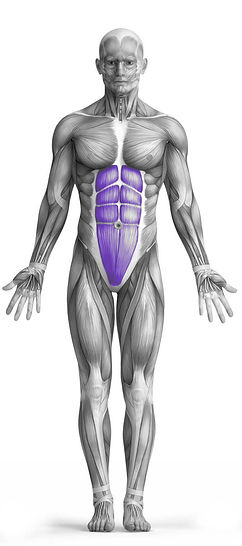

Exercise Synopsis
Target Muscle Group
Abs
Secondary Targets
None
Execution
Isolation
Force Type
N/A
Required Equipment
Bodyweight
Fitness Level
Beginner
Variations
None
Alternatives
None
Timer
Hour
Minute
Second
Stopwatch
00:00:00:00
Overview
The Abdominal Hip Thrust is a bodyweight exercise designed to effectively target the abdominal muscles, particularly the lower abs. It involves lying on your back with your legs raised and knees slightly bent, then lifting your hips off the ground by contracting your core and pressing your lower back into the floor. This controlled upward thrust isolates the abdominal muscles, minimizing engagement from other muscle groups. With no additional equipment required, this exercise is accessible for all fitness levels and is ideal for enhancing core strength, stability, and overall abdominal definition. Proper form is essential to maximize benefits and avoid strain on the lower back.
How to Perform
Position a flat bench and lie on your back so your feet extend off one end.
Reach above your head to hold the bench for stability, and lift your legs upward until they are perpendicular to the ground, creating a straight line with your body. This is your starting position.
Engage your core and press through your legs to lift your hips off the bench, aiming to form a straight alignment from your knees to your shoulders.
With control, lower your hips back to the bench, ensuring your abdominal muscles remain tight throughout the movement to maintain stability.
Continue performing the movement for your chosen number of repetitions, focusing on a steady pace and precise form to maximize core engagement.
★ Bonus: For exercises that involve external weights (such as dumbbells, barbells, or machines), the One Rep Max (1RM) calculator can help you estimate your maximum lifting capacity. Use it to track your strength progress and adjust your training for optimal results.
Tips
Engage your core muscles fully before starting the movement to ensure the focus stays on your abdominals rather than placing unnecessary strain on your lower back.
Perform each repetition with control, avoiding any jerking or swinging motions. Lift your hips slowly and deliberately, and lower them back down with the same level of control to optimize muscle activation.
Although your feet provide support during the exercise, concentrate on using your abdominal muscles to drive the movement. The primary aim is to target the lower abs rather than shifting the effort to the glutes or other areas.
Coordinate your breathing with the movement: exhale as you lift your hips toward the ceiling, and inhale as you return to the starting position. This helps maintain stability and a steady rhythm throughout the exercise.
How Not to Perform
Avoid Arching Your Lower Back
Do not let your lower back lift off the bench or floor as you perform the exercise. This reduces engagement of the abdominal muscles and places unnecessary strain on your spine. Focus on keeping your lower back pressed into the surface throughout.
Don’t Use Momentum
Avoid swinging your legs or jerking your hips upward. Using momentum takes the load off your abs and shifts the focus to other areas, diminishing the effectiveness of the exercise. Perform slow, controlled movements to target the abdominal muscles properly.
Don’t Overextend Your Hips
Lifting your hips too high can lead to overextension and strain on your lower back. Aim to raise your hips just enough to engage the lower abs, forming a straight line from your shoulders to your knees without overdoing it.
Avoid Relaxing Your Core
Do not let your core disengage during the lowering phase. Keep your abdominal muscles tight and active throughout the entire movement to maintain proper form and prevent injury.
Don’t Hold Your Breath
Holding your breath can increase tension and reduce stability. Instead, practice proper breathing: exhale as you lift your hips and inhale as you lower them back down. This rhythm helps maintain control and focus.
Avoid Incorrect Leg Positioning
Keep your legs aligned and slightly bent. Letting your legs drift apart or remain too stiff can make the movement less effective and strain other areas.
Don’t Overload with Speed
Performing the exercise too quickly sacrifices form for speed. This wastes energy and reduces muscle engagement. Prioritize precision and control over the number of repetitions.
Avoid Tightening Your Neck or Shoulders
Keep your neck relaxed and shoulders away from your ears. Tensing these areas can lead to discomfort and detract from your focus on the abdominal muscles.
Variations
Variations of fitness exercises refer to different ways of performing a specific exercise or movement to target various muscle groups, intensities, or goals. These variations aim to challenge the body differently, prevent plateaus, and cater to individuals with varying fitness levels.
Alternatives
Alternative exercises in fitness refer to different movements or activities that target similar muscle groups or serve the same training purpose as the primary exercise. These alternative exercises can be used as substitutes when the original exercise is unavailable or challenging to perform due to various reasons such as equipment limitations, injuries, or personal preferences.
