


Barbell Rollout From Bench 101 Video Tutorial
0
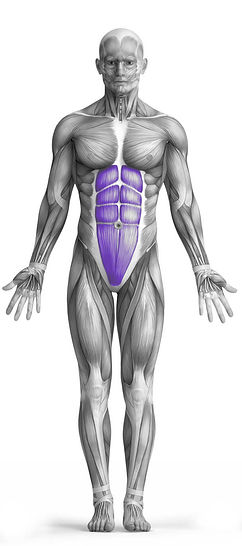

Exercise Synopsis
Target Muscle Group
Abs
Secondary Targets
Execution
Isolation
Force Type
Core
Required Equipment
Barbell
Fitness Level
Advanced
Variations
Alternatives
None
Timer
Hour
Minute
Second
Stopwatch
00:00:00:00
Overview
Barbell Rollout From Bench is an isolation exercise targeting the abs, with secondary activation of the obliques. Using a barbell placed perpendicular to a bench, you kneel on the bench and grip the bar with an overhand, shoulder-width grip. By keeping the elbows slightly bent, you roll the bar forward while maintaining a neutral spine, stretching the abdominal muscles, and then slowly return to the starting position, engaging the core throughout the movement. This exercise emphasizes controlled movement to maximize abdominal engagement and stability.
How to Perform
Position a loaded barbell across the end of a bench so that it sits perpendicular to the bench.
Kneel on the bench and grasp the bar with an overhand grip, aligning your hands roughly shoulder-width apart.
Maintain a slight bend in your elbows and engage your core as you inhale and carefully extend the bar forward, keeping your spine neutral.
Exhale as you draw the bar back toward your body in a controlled manner, ensuring your abs stay engaged throughout.
Continue this forward and backward motion for the number of reps specified, focusing on smooth, deliberate movements to maximize core activation and stability.
★ Bonus: For exercises that involve external weights (such as dumbbells, barbells, or machines), the One Rep Max (1RM) calculator can help you estimate your maximum lifting capacity. Use it to track your strength progress and adjust your training for optimal results.
Tips
Performing the barbell rollout from a bench is more advanced than the standard rollout because kneeling on the bench raises your center of gravity, increasing the demand on your core and surrounding muscles.
The iliopsoas, a key hip flexor and external rotator of the femur, plays an important role in stabilizing the hip joint during this movement.
This exercise helps improve core stability, balance, and overall coordination.
Compared to the floor rollout, kneeling on the bench increases the range of waist flexion, engaging the rectus abdominis more intensely as a secondary target.
Avoid letting your lower back sag, as this can strain your spine; sagging indicates you are extending too far.
If the movement is too difficult, begin by mastering the barbell rollout from the floor before progressing to the bench version.
How Not to Perform
Do not let your lower back sag or arch excessively while rolling out, as this can strain the spine.
Do not lock your elbows; keeping them fully straight shifts tension away from the abs.
Do not roll out too far beyond your control, which can compromise form and risk injury.
Do not use momentum or rapid movements; this reduces core engagement and increases injury risk.
Do not grip the bar too narrowly or too widely, which can place unnecessary stress on wrists and shoulders.
Do not allow your hips to drop or rise excessively, which takes tension off the target muscles.
Do not perform the exercise without engaging the core and bracing the abs, as this decreases effectiveness.
Do not skip mastering the floor rollout first if the bench version feels too challenging.
Variations
Variations of fitness exercises refer to different ways of performing a specific exercise or movement to target various muscle groups, intensities, or goals. These variations aim to challenge the body differently, prevent plateaus, and cater to individuals with varying fitness levels.
Alternatives
Alternative exercises in fitness refer to different movements or activities that target similar muscle groups or serve the same training purpose as the primary exercise. These alternative exercises can be used as substitutes when the original exercise is unavailable or challenging to perform due to various reasons such as equipment limitations, injuries, or personal preferences.
