


Cross-Body Carry 101 Video Tutorial
0
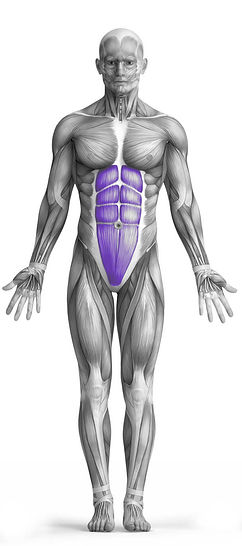

Exercise Synopsis
Target Muscle Group
Abs
Secondary Targets
Execution
Compound
Force Type
Core
Required Equipment
Kettlebell
Fitness Level
Intermediate
Variations
None
Alternatives
Timer
Hour
Minute
Second
Stopwatch
00:00:00:00
Overview
The Cross-Body Carry is a kettlebell exercise that primarily targets the abs while also engaging the obliques as a secondary muscle group. It involves holding the kettlebell across the body and walking a set distance or for a set time, requiring core stabilization to maintain proper posture and control the weight. This movement challenges the core dynamically, improving rotational stability, anti-lateral flexion strength, and overall trunk endurance, making it effective for both core strengthening and functional stability.
How to Perform
Stand upright with feet shoulder-width apart, holding a kettlebell in one hand.
Position the kettlebell across your torso, with the bottom of the bell near the opposite hip and the handle resting near your shoulder.
Engage your core and obliques to stabilize your trunk and prevent leaning or twisting.
Keep your shoulders down and back, chest lifted, and eyes forward.
Begin walking forward slowly, maintaining a controlled and upright posture.
Focus on resisting rotation of the torso as you move, keeping the kettlebell steady.
Walk a set distance or time, then carefully switch the kettlebell to the opposite side and repeat.
Maintain steady breathing throughout the exercise.
Return to the starting position with controlled movements once the set is complete.
★ Bonus: For exercises that involve external weights (such as dumbbells, barbells, or machines), the One Rep Max (1RM) calculator can help you estimate your maximum lifting capacity. Use it to track your strength progress and adjust your training for optimal results.
Tips
Choose a kettlebell weight that challenges your core without compromising posture.
Keep your core tight and avoid letting your torso lean toward the kettlebell side.
Maintain a neutral spine and avoid overarching your lower back.
Walk slowly and deliberately to maximize core engagement.
Focus on controlling the kettlebell rather than rushing the distance.
Switch sides evenly to prevent muscular imbalances.
Keep your shoulders down and avoid shrugging.
Breathe steadily and avoid holding your breath.
Engage your obliques to resist rotational forces throughout the movement.
Start with shorter distances or times, gradually increasing as strength improves.
How Not to Perform
Do not use a kettlebell that is too heavy, which can cause loss of balance or poor posture.
Do not allow your torso to lean toward the kettlebell side.
Do not let your shoulders shrug or hunch forward.
Do not twist or rotate your spine excessively while walking.
Do not walk too quickly, which reduces core engagement and control.
Do not hold your breath; avoid bracing incorrectly.
Do not neglect switching sides, which can create muscular imbalances.
Do not arch your lower back; keep a neutral spine.
Do not let the kettlebell swing away from your body; keep it controlled.
Do not shorten your step excessively, which limits stability and core activation.
Variations
Variations of fitness exercises refer to different ways of performing a specific exercise or movement to target various muscle groups, intensities, or goals. These variations aim to challenge the body differently, prevent plateaus, and cater to individuals with varying fitness levels.
Alternatives
Alternative exercises in fitness refer to different movements or activities that target similar muscle groups or serve the same training purpose as the primary exercise. These alternative exercises can be used as substitutes when the original exercise is unavailable or challenging to perform due to various reasons such as equipment limitations, injuries, or personal preferences.
