


Floor Crunch (legs on bench) 101 Video Tutorial
0

Exercise Synopsis
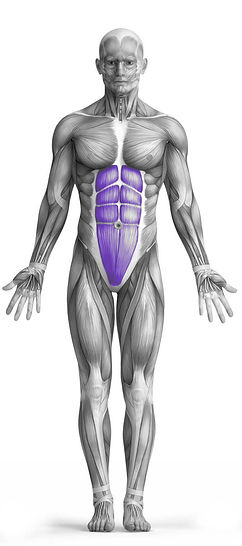
Target Muscle Group
Abs
Secondary Targets
None
Execution
Isolation
Force Type
Pull
Required Equipment
Bodyweight
Fitness Level
Beginner
Variations
None
Alternatives
None
Timer
Hour
Minute
Second
Stopwatch
00:00:00:00
Overview
The Floor Crunch (legs on bench) is a bodyweight exercise designed to target the abdominal muscles, specifically engaging the rectus abdominis for core strength and stability. By placing the legs on a bench, the lower body is stabilized, reducing strain on the lower back and isolating the abdominal muscles more effectively. This exercise is performed by lying flat on the floor with the lower legs resting on a bench at a 90-degree angle, hands behind the head or crossed over the chest, and lifting the upper torso toward the knees using the core muscles. It’s a simple yet effective movement requiring no additional equipment, making it an accessible option for improving core strength without secondary muscle group involvement.
How to Perform
Lay down a comfortable exercise mat on the floor and position a flat bench perpendicular to the mat, forming a T-shape setup.
Lie on your back with your legs elevated and resting on the bench. Ensure your calves rest fully on the bench's surface, and your knees are bent at a 90-degree angle to create proper alignment.
Lightly place your fingertips on the sides of your head, avoiding any pulling or pressure on your neck. Keep your elbows slightly out to the sides for balance.
Begin by engaging your core and lifting your shoulder blades just off the mat, ensuring your lower back stays in contact with the floor for stability.
Perform a crunch by contracting your abdominal muscles, bringing your upper body slightly forward as if aiming your elbows toward your knees or hips.
Hold the top position for a brief pause, focusing on the squeeze in your abs for maximum activation.
Slowly lower your upper body back to the starting position, maintaining control to avoid using momentum and ensuring your core remains engaged throughout.
Repeat the movement for the desired number of repetitions, prioritizing controlled motion and proper form to prevent strain or injury.
★ Bonus: For exercises that involve external weights (such as dumbbells, barbells, or machines), the One Rep Max (1RM) calculator can help you estimate your maximum lifting capacity. Use it to track your strength progress and adjust your training for optimal results.
Tips
Maintain a slight elevation of your shoulder blades off the mat throughout the entire set to keep constant tension on your abdominal muscles.
At the peak of each crunch, hold the position for an extended moment to intensify the contraction and further challenge your core.
How Not to Perform
Avoid Pulling on Your Neck: Do not interlock your fingers behind your head or pull your neck forward during the movement. This can strain your neck and reduce the focus on your abdominal muscles. Keep your hands lightly touching the sides of your head instead.
Don’t Lift Your Lower Back Off the Mat: Ensure your lower back stays in contact with the mat throughout the exercise. Lifting it can reduce core engagement and may cause lower back discomfort.
Avoid Using Momentum: Perform the crunch slowly and with control. Do not use jerking or swinging motions to lift your torso, as this reduces the effectiveness of the exercise and wastes energy.
Don’t Tuck Your Chin Too Much: Keep your chin slightly elevated and avoid pressing it into your chest. This helps maintain proper neck alignment and reduces unnecessary strain.
Don’t Overextend the Crunch: Avoid trying to lift too high, as the goal is not to sit all the way up. A small, controlled lift is sufficient to activate the abs effectively.
Avoid Holding Your Breath: Exhale as you crunch up and inhale as you lower down. Holding your breath can increase tension in your neck and reduce overall performance.
Don’t Let Your Shoulder Blades Rest: Keep your shoulder blades slightly off the mat for the entire set. Allowing them to touch the mat during repetitions reduces the constant tension on the abs.
Avoid Incorrect Leg Positioning: Ensure your legs remain bent at 90 degrees and resting fully on the bench. Letting your legs slide or move can shift the focus away from your core.
Don’t Rush the Movement: Focus on a steady tempo, avoiding rapid repetitions. Slow, controlled movements ensure better muscle activation and minimize the risk of mistakes or injury.
Variations
Variations of fitness exercises refer to different ways of performing a specific exercise or movement to target various muscle groups, intensities, or goals. These variations aim to challenge the body differently, prevent plateaus, and cater to individuals with varying fitness levels.
Alternatives
Alternative exercises in fitness refer to different movements or activities that target similar muscle groups or serve the same training purpose as the primary exercise. These alternative exercises can be used as substitutes when the original exercise is unavailable or challenging to perform due to various reasons such as equipment limitations, injuries, or personal preferences.
