


Side Plank On Ball 101 Video Tutorial
0
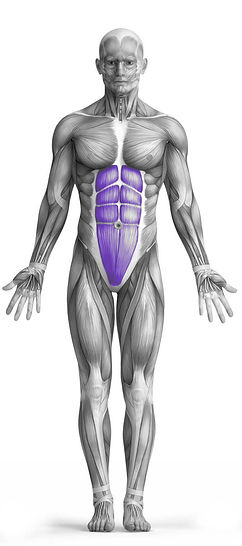

Exercise Synopsis
Target Muscle Group
Abs
Secondary Targets
Execution
Isolation
Force Type
Isometric
Required Equipment
Exercise Ball
Fitness Level
Intermediate
Variations
None
Alternatives
Timer
Hour
Minute
Second
Stopwatch
00:00:00:00
Overview
The Side Plank On Ball is an advanced core exercise that primarily targets the abs while engaging the obliques as a secondary muscle group. Performed on an exercise ball, it challenges stability and balance, requiring the core muscles to work isometrically to maintain proper spinal alignment. By positioning the hips and waist on the ball and executing lateral side-bends, this exercise activates the transversus abdominis, internal obliques, multifidi, and quadratus lumborum, enhancing core strength, stability, and overall control. It also improves proprioception and coordination due to the unstable surface of the ball.
How to Perform
Position yourself on your left side atop an exercise ball, ensuring your hips and waist rest comfortably on the ball. Place your feet lightly against the floor and, if needed, a wall to maintain stability.
Bring your fingertips to rest behind your ears, keeping your elbows slightly out, and engage your core to stabilize your spine against the ball.
Take a deep breath in, then slowly bend your torso laterally toward the right, concentrating on activating the left internal oblique and transversus abdominis. Your multifidi and left quadratus lumborum should also assist in maintaining control.
Pause at the end of the side-bend, exhaling as you hold a firm isometric contraction for 3 to 5 seconds.
Gradually return to the starting side position with controlled movement, avoiding any sudden shifts.
Repeat this movement 8 to 10 times before switching to the opposite side.
As your balance and core strength improve, extend the hold duration beyond 5 seconds to further challenge your stabilizing muscles and improve overall coordination.
★ Bonus: For exercises that involve external weights (such as dumbbells, barbells, or machines), the One Rep Max (1RM) calculator can help you estimate your maximum lifting capacity. Use it to track your strength progress and adjust your training for optimal results.
Tips
Keep your core engaged throughout to maintain stability on the ball.
Avoid letting your hips sag or rotate; keep them aligned with your spine.
Use a wall or your feet for extra support if you feel unstable.
Focus on slow, controlled movements rather than speed.
Breathe steadily and do not hold your breath during the side-bend.
Keep your shoulders relaxed and away from your ears.
Gradually increase hold time to challenge your stabilizing muscles.
Ensure the ball is properly inflated to provide adequate support.
Start with fewer repetitions until your balance improves.
Concentrate on feeling the obliques and deep core muscles working.
How Not to Perform
Do not let your hips drop or twist; keep them stacked and aligned.
Do not use momentum to bend sideways; control each movement.
Do not hold your breath; maintain steady breathing throughout.
Do not place your elbows too close to your head, which can strain your neck.
Do not perform the exercise on an underinflated or unstable ball.
Do not rush through repetitions; slow and controlled is key.
Do not arch or hyperextend your lower back.
Do not shift weight onto your arms instead of engaging your core.
Do not attempt long hold times before your core is strong enough.
Do not let your shoulders shrug up toward your ears.
Variations
Variations of fitness exercises refer to different ways of performing a specific exercise or movement to target various muscle groups, intensities, or goals. These variations aim to challenge the body differently, prevent plateaus, and cater to individuals with varying fitness levels.
Alternatives
Alternative exercises in fitness refer to different movements or activities that target similar muscle groups or serve the same training purpose as the primary exercise. These alternative exercises can be used as substitutes when the original exercise is unavailable or challenging to perform due to various reasons such as equipment limitations, injuries, or personal preferences.
