


Side Plank Pulse 101 Video Tutorial
0
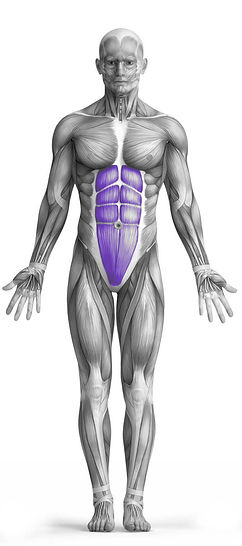

Exercise Synopsis
Target Muscle Group
Abs
Secondary Targets
Execution
Isolation
Force Type
Core
Required Equipment
Bodyweight
Fitness Level
Intermediate
Variations
None
Alternatives
None
Timer
Hour
Minute
Second
Stopwatch
00:00:00:00
Overview
The Side Plank Pulse is a bodyweight exercise that primarily targets the abs while engaging the obliques as a secondary muscle group. It involves holding a side plank position with weight supported on one forearm and the side of one foot, maintaining a straight body line. From this position, the hips are gently lowered a few inches toward the floor and then pulsed back up, requiring controlled core engagement throughout the movement. This exercise strengthens the abdominal muscles, improves lateral stability, and enhances oblique activation without the need for any equipment.
How to Perform
Begin by lying on your side and lifting your body into a side plank, resting on one forearm and the outer edge of the same-side foot.
Align your head, shoulders, hips, and legs in a straight line, keeping your body stable.
Tighten your abdominal muscles to raise your hips slightly higher than the resting line.
Slowly lower your hips a small distance toward the floor, maintaining control and balance.
Lift your hips back to the starting position with a small, controlled pulsing motion.
Focus on steady breathing and maintaining tension in your core throughout the movement.
Keep your shoulders stacked over your supporting arm and avoid letting your hips sag or rotate forward.
★ Bonus: For exercises that involve external weights (such as dumbbells, barbells, or machines), the One Rep Max (1RM) calculator can help you estimate your maximum lifting capacity. Use it to track your strength progress and adjust your training for optimal results.
Tips
Maintain constant tension in your abdominal muscles during the entire exercise.
Prevent your hips from dropping too low or losing alignment.
Perform the pulsing motion with deliberate, controlled movements.
Ensure your shoulder stays directly above your supporting elbow at all times.
How Not to Perform
Do not let your hips drop toward the floor, which shifts tension away from the abs and obliques.
Do not twist or rotate your torso, as this reduces core engagement and risks injury.
Do not extend your supporting arm or elbow incorrectly, which can strain the shoulder.
Do not rush the pulsing motion, as fast movements decrease effectiveness and control.
Do not relax your core at any point, which diminishes the focus on the target muscles.
Do not allow your head or neck to sag, keeping alignment with the spine.
Do not lift your hips excessively high, which shifts work away from the obliques and abs.
Do not let your supporting foot or forearm slip, which can compromise stability and safety.
Variations
Variations of fitness exercises refer to different ways of performing a specific exercise or movement to target various muscle groups, intensities, or goals. These variations aim to challenge the body differently, prevent plateaus, and cater to individuals with varying fitness levels.
Alternatives
Alternative exercises in fitness refer to different movements or activities that target similar muscle groups or serve the same training purpose as the primary exercise. These alternative exercises can be used as substitutes when the original exercise is unavailable or challenging to perform due to various reasons such as equipment limitations, injuries, or personal preferences.
