


Single-Arm Barbell Suitcase Hold 101 Video Tutorial
0
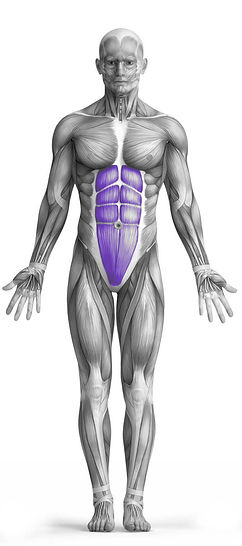

Exercise Synopsis
Target Muscle Group
Abs
Secondary Targets
Execution
Isolation
Force Type
Isometric
Required Equipment
Barbell
Fitness Level
Intermediate
Variations
Alternatives
Timer
Hour
Minute
Second
Stopwatch
00:00:00:00
Overview
The Single-Arm Barbell Suitcase Hold is an isometric core exercise that primarily targets the abs while engaging the forearms as a secondary muscle group. Performed with a barbell held in one hand at the side of the body, it challenges the core to resist lateral flexion and maintain a stable, upright posture. This exercise enhances core strength, improves grip endurance, and promotes overall stability and balance by forcing the body to counteract the uneven load.
How to Perform
Stand upright with your feet hip-width apart, holding a barbell in one hand at your side with a neutral grip, letting it hang naturally.
Engage your core, keep your shoulders back and down, chest lifted, and spine neutral.
Tighten your abs and glutes to prevent your torso from leaning toward the weight.
Keep the barbell close to your body, allowing your arm to remain straight and relaxed, while maintaining full-body tension.
Breathe normally, avoiding holding your breath, while keeping your core engaged.
Hold the position for the desired time, focusing on resisting lateral bending and maintaining upright posture.
Carefully lower the barbell after the hold, rest briefly, and repeat on the opposite side.
★ Bonus: For exercises that involve external weights (such as dumbbells, barbells, or machines), the One Rep Max (1RM) calculator can help you estimate your maximum lifting capacity. Use it to track your strength progress and adjust your training for optimal results.
Tips
Keep your core fully engaged to prevent leaning toward the weight.
Maintain a neutral spine and avoid rounding your back.
Keep the barbell close to your body for better control.
Focus on breathing steadily to sustain the hold.
Avoid shrugging your shoulders; keep them down and relaxed.
Engage your glutes to support spinal stability.
Do not lock your elbow completely; keep a slight bend if needed.
Gradually increase hold duration instead of starting too long.
Switch sides evenly to prevent muscular imbalances.
Use a weight that challenges your core without compromising form.
How Not to Perform
Do not allow your torso to lean toward the weighted side.
Do not round or arch your back; maintain a neutral spine.
Do not let the barbell drift away from your body.
Do not shrug your shoulders or tense your neck.
Do not hold your breath; avoid bracing incorrectly.
Do not use a weight that is too heavy, compromising form.
Do not lock your elbow completely if it causes strain.
Do not rush the exercise; maintain controlled, steady posture.
Do not neglect switching sides evenly, which can cause imbalance.
Do not relax your core or glutes during the hold.
Variations
Variations of fitness exercises refer to different ways of performing a specific exercise or movement to target various muscle groups, intensities, or goals. These variations aim to challenge the body differently, prevent plateaus, and cater to individuals with varying fitness levels.
Alternatives
Alternative exercises in fitness refer to different movements or activities that target similar muscle groups or serve the same training purpose as the primary exercise. These alternative exercises can be used as substitutes when the original exercise is unavailable or challenging to perform due to various reasons such as equipment limitations, injuries, or personal preferences.
