


Smith Hip Raise 101 Video Tutorial
0
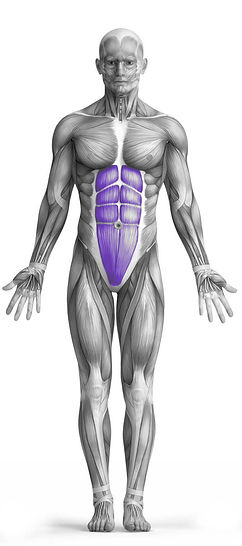

Exercise Synopsis
Target Muscle Group
Abs
Secondary Targets
Execution
Compound
Force Type
Hinge (Bilateral)
Required Equipment
Smith Machine
Fitness Level
Intermediate
Variations
Alternatives
Timer
Hour
Minute
Second
Stopwatch
00:00:00:00
Overview
The Smith Hip Raise is a controlled lower-body and core-focused exercise performed using a Smith machine, where the lifter lies on the floor beneath the bar and drives the hips upward against the fixed resistance. The movement primarily emphasizes the abdominal muscles through core bracing and pelvic control while strongly engaging the glutes as a secondary muscle group to extend the hips. The guided bar path of the Smith machine allows for greater stability, making it easier to maintain proper alignment and tension throughout the lift, especially at the top position where the body forms a straight line from shoulders to knees.
How to Perform
Adjust the Smith machine bar to a low position that allows you to lie comfortably beneath it without restriction.
Position yourself flat on your back under the bar, bend your knees, and place your feet flat on the floor at hip width, close enough to allow strong hip drive.
Grip the bar with a pronated grip, hands aligned roughly at shoulder width, and keep your arms steady to stabilize the bar.
Brace your abdominal muscles, lightly tuck your pelvis, and activate your glutes before initiating the lift.
Drive through your heels and raise your hips upward, guiding the bar along its fixed path until your torso and thighs form a straight line.
Pause briefly at the top position while maintaining full core tension and consciously contracting the glutes.
Lower your hips under control back toward the floor, keeping your spine neutral and avoiding excessive arching or relaxation.
Reset tension at the bottom without resting fully, then continue for the intended number of repetitions.
★ Bonus: For exercises that involve external weights (such as dumbbells, barbells, or machines), the One Rep Max (1RM) calculator can help you estimate your maximum lifting capacity. Use it to track your strength progress and adjust your training for optimal results.
Tips
Maintain constant abdominal bracing throughout the movement to keep tension on the abs rather than shifting the load to the lower back.
Keep the rib cage pulled down and avoid flaring it upward at the top position to maximize core engagement.
Drive through the heels to improve hip extension efficiency and enhance glute contribution.
Use a controlled tempo, especially during the lowering phase, to prevent momentum from reducing abdominal activation.
Stop the hip drive once the body forms a straight line and avoid overextending the hips at the top.
Keep the feet planted and stable to prevent unwanted leg movement that can reduce force transfer.
Focus on posterior pelvic tilt at the top to increase abdominal contraction.
Choose a load that allows full control and proper tension rather than prioritizing heavier weight.
How Not to Perform
Do not arch the lower back at the top of the movement, as this shifts tension away from the abs and increases spinal stress.
Do not allow the ribs to flare upward, which reduces core engagement and places unnecessary load on the lumbar spine.
Do not use momentum or bounce the hips off the floor, as this wastes energy and limits muscle activation.
Do not push through the toes, since this decreases glute contribution and destabilizes the movement.
Do not let the knees collapse inward or drift excessively, which can compromise hip alignment.
Do not relax the core at the bottom position; maintain tension to keep continuous abdominal engagement.
Do not overload the bar, as excessive weight encourages poor form and compensatory patterns.
Do not rush the repetitions, as fast tempo reduces control and increases injury risk.
Variations
Variations of fitness exercises refer to different ways of performing a specific exercise or movement to target various muscle groups, intensities, or goals. These variations aim to challenge the body differently, prevent plateaus, and cater to individuals with varying fitness levels.
Alternatives
Alternative exercises in fitness refer to different movements or activities that target similar muscle groups or serve the same training purpose as the primary exercise. These alternative exercises can be used as substitutes when the original exercise is unavailable or challenging to perform due to various reasons such as equipment limitations, injuries, or personal preferences.
