


Split-Leg Crunch 101 Video Tutorial
0

Timer
Hour
Minute
Second
Stopwatch
00:00:00:00
Overview
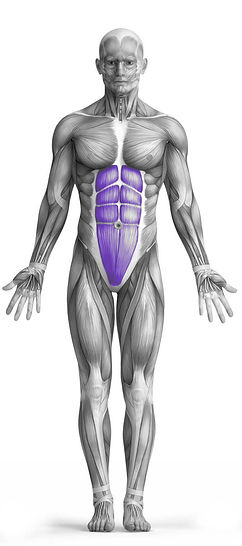
The Split-Leg Crunch is a bodyweight exercise that primarily targets the abdominal muscles. Performed by lying on your back, lifting your head, shoulders, and legs into a V-sit position, and moving the legs in a scissor-like motion, it engages the core intensely while keeping the lower back pressed into the mat for stability. This isolation exercise focuses on strengthening and defining the abs, improving core endurance and control without the need for any equipment.
How to Perform
Position yourself lying flat on a mat with your back fully supported.
Simultaneously raise your head, shoulders, and legs, forming a balanced V-shape with your body.
Extend your legs outward and then cross them over each other in a controlled scissor-like movement.
Engage your core throughout the motion, ensuring your lower back stays firmly pressed against the mat.
Maintain steady breathing and controlled movements to maximize abdominal activation and prevent strain.
★ Bonus: For exercises that involve external weights (such as dumbbells, barbells, or machines), the One Rep Max (1RM) calculator can help you estimate your maximum lifting capacity. Use it to track your strength progress and adjust your training for optimal results.
Tips
Keep your lower back firmly pressed against the mat at all times.
Move your legs slowly and deliberately, avoiding rapid or jerky motions.
Continuously tighten your core muscles to maintain abdominal engagement.
Prevent unnecessary tension in your neck by supporting it gently and avoiding lifting it too high.
Maintain smooth, controlled breathing throughout the exercise.
How Not to Perform
Do not arch or lift your lower back off the mat.
Do not swing your legs uncontrollably or use momentum.
Do not relax your core; avoid letting your abs disengage.
Do not lift your head or neck excessively, causing strain.
Do not hold your breath; avoid irregular or shallow breathing.
Do not rush through the movement; avoid fast, uncontrolled repetitions.
Do not let your legs touch the floor between repetitions.
Do not allow your shoulders to collapse; keep them lifted and engaged.
Do not perform the exercise on a hard surface without a mat, which may cause discomfort or injury.
Do not extend your legs beyond your flexibility limits, which may compromise form and reduce core engagement.
Variations
Variations of fitness exercises refer to different ways of performing a specific exercise or movement to target various muscle groups, intensities, or goals. These variations aim to challenge the body differently, prevent plateaus, and cater to individuals with varying fitness levels.
Alternatives
Alternative exercises in fitness refer to different movements or activities that target similar muscle groups or serve the same training purpose as the primary exercise. These alternative exercises can be used as substitutes when the original exercise is unavailable or challenging to perform due to various reasons such as equipment limitations, injuries, or personal preferences.
