


Stir the Pot on Exercise Ball 101 Video Tutorial
0

Exercise Synopsis
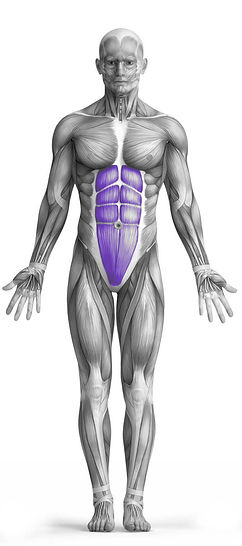
Target Muscle Group
Abs
Secondary Targets
None
Execution
Compound
Force Type
Isometric
Required Equipment
Exercise Ball
Fitness Level
Beginner
Variations
None
Alternatives
None
Timer
Hour
Minute
Second
Stopwatch
00:00:00:00
Overview
The "Stir the Pot on Exercise Ball" is an effective core exercise designed to engage and strengthen the abdominal muscles. Performed on an exercise ball, the movement involves positioning your forearms on the ball while maintaining a plank-like stance with your body. From this position, you make circular motions with your arms, simulating the action of stirring a pot. This dynamic movement challenges your core stability, forcing your abs to engage to maintain balance and control. While the primary target is the abs, no secondary muscle groups are directly involved. It requires an exercise ball to perform the movement effectively.
How to Perform
Begin by kneeling on the floor and place your forearms firmly on the exercise ball, ensuring it is stable.
Extend your legs behind you, maintaining a position where your feet are shoulder-width apart or slightly wider for better balance.
From this plank-like stance, gently start rotating your arms in a clockwise direction, making controlled circular motions.
Continue rotating in the clockwise direction for the designated number of repetitions.
After completing the clockwise rotations, reverse the direction and rotate your arms counterclockwise for the same number of repetitions.
★ Bonus: For exercises that involve external weights (such as dumbbells, barbells, or machines), the One Rep Max (1RM) calculator can help you estimate your maximum lifting capacity. Use it to track your strength progress and adjust your training for optimal results.
Tips
Ensure that the movement comes from your shoulders, keeping your forearms and upper arms at a nearly 90-degree angle throughout.
As you rotate your forearms, be mindful not to let your lower back arch. Engage your core and squeeze your glutes to maintain stability.
Rotate your arms slowly and with control, making sure your hips remain steady and don’t drop to either side.
Press your elbows into the ball to activate your serratus anterior while rotating your forearms, helping to engage your upper body more effectively.
Breathe steadily throughout the exercise. Avoid holding your breath, as relying on your breathing to maintain stability can compromise your form. Focus on controlling the movement and maintaining proper positioning without needing to use your breath for support.
How Not to Perform
Avoid Using Momentum: Do not rely on swinging or jerking your arms to complete the rotations. Focus on controlled, smooth movements to engage your core and prevent unnecessary energy expenditure.
Don’t Let Your Hips Drop: Avoid letting your hips sag toward the floor during the movement. This can lead to lower back strain and reduces the effectiveness of the exercise. Keep your body in a straight line from head to heels.
Don’t Overextend Your Arms: Keep your forearms and upper arms at a 90-degree angle during the rotation. Overextending or straining your arms can cause unnecessary tension in your shoulders and detract from the focus on your abs.
Avoid Arching Your Lower Back: Keep your lower back neutral and avoid arching it as you rotate. An arched lower back puts unnecessary pressure on the spine and can lead to discomfort or injury.
Don’t Hold Your Breath: Resist the urge to hold your breath during the exercise. Proper breathing helps maintain stability and focus, preventing tension in the upper body and aiding in muscle engagement.
Don’t Rush the Rotation: Avoid performing the movement too quickly. Speed can lead to sloppy form and less muscle activation. Take your time with each rotation to ensure proper form and maximum engagement of the abdominal muscles.
Don’t Ignore Your Core: Failing to engage your core throughout the exercise can result in inefficient movement and potential strain on your back. Always keep your abs tight and focused on stabilizing your body.
Don’t Use Too Wide of a Stance: A stance that is too wide can make it harder to maintain balance and engage your core properly. Keep your feet about shoulder-width apart for better stability.
Variations
Variations of fitness exercises refer to different ways of performing a specific exercise or movement to target various muscle groups, intensities, or goals. These variations aim to challenge the body differently, prevent plateaus, and cater to individuals with varying fitness levels.
Alternatives
Alternative exercises in fitness refer to different movements or activities that target similar muscle groups or serve the same training purpose as the primary exercise. These alternative exercises can be used as substitutes when the original exercise is unavailable or challenging to perform due to various reasons such as equipment limitations, injuries, or personal preferences.
