


Trx Pendulum 101 Video Tutorial
0

Exercise Synopsis
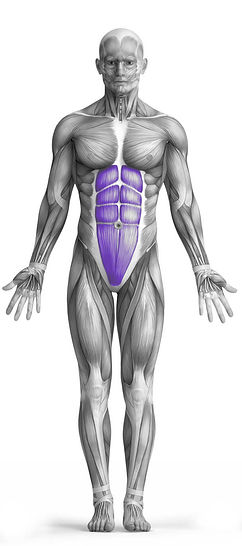
Target Muscle Group
Abs
Secondary Targets
Execution
Compound
Force Type
Core
Required Equipment
Band
Fitness Level
Intermediate
Variations
None
Alternatives
None
Timer
Hour
Minute
Second
Stopwatch
00:00:00:00
Overview
The Trx Pendulum is an advanced core exercise that primarily targets the abs while engaging the obliques as secondary muscles. Using a TRX band, you anchor the straps and place your feet in them, lifting your body into a plank position with hips and knees extended and the spine neutrally aligned. From this position, you swing your legs side to side in a controlled manner, keeping the core tight and engaged throughout. This dynamic movement challenges stability, strengthens the entire core, and improves coordination and balance.
How to Perform
Anchor the TRX band securely to a stable point and adjust the straps to a long length.
Place your feet in the TRX straps, ensuring they are secure.
Lift your body off the floor into a plank position with hips and knees extended.
Align your spine neutrally and keep your core tight throughout the exercise.
Swing your legs slowly and controlled from side to side, focusing on engaging your obliques.
Maintain a straight body line and prevent your hips from sagging or rising excessively.
Continue swinging for the desired number of repetitions, keeping the core fully engaged at all times.
★ Bonus: For exercises that involve external weights (such as dumbbells, barbells, or machines), the One Rep Max (1RM) calculator can help you estimate your maximum lifting capacity. Use it to track your strength progress and adjust your training for optimal results.
Tips
Keep your core engaged throughout the entire movement to maximize ab activation.
Move your legs in a controlled, steady manner to avoid momentum taking over.
Maintain a neutral spine to prevent lower-back strain.
Avoid letting your hips sag or lift too high during the swings.
Focus on engaging the obliques when swinging side to side.
Breathe steadily and avoid holding your breath.
Ensure your shoulders are stable and not shrugging toward your ears.
Start with smaller swings if you are new to the exercise.
Keep your feet securely in the TRX straps to maintain balance.
Concentrate on slow, deliberate movements rather than speed for better core control.
How Not to Perform
Do not let your hips sag or rise excessively, as this reduces core engagement and strains the lower back.
Do not use momentum to swing your legs; this decreases oblique activation.
Do not allow your shoulders to shrug toward your ears, which can cause shoulder tension or injury.
Do not arch or round your spine; maintain a neutral alignment at all times.
Do not hold your breath; breathe steadily to maintain core stability.
Do not swing too quickly; rapid movements reduce control and effectiveness.
Do not place your feet insecurely in the straps, as this can cause slipping and injury.
Do not let your head drop; keep it aligned with your spine to avoid neck strain.
Do not relax your core during the movement; keep it engaged to target the abs effectively.
Do not extend beyond your flexibility limits; maintain safe range of motion.
Variations
Variations of fitness exercises refer to different ways of performing a specific exercise or movement to target various muscle groups, intensities, or goals. These variations aim to challenge the body differently, prevent plateaus, and cater to individuals with varying fitness levels.
Alternatives
Alternative exercises in fitness refer to different movements or activities that target similar muscle groups or serve the same training purpose as the primary exercise. These alternative exercises can be used as substitutes when the original exercise is unavailable or challenging to perform due to various reasons such as equipment limitations, injuries, or personal preferences.
