


45-Degree Side Bend 101 Video Tutorial
0
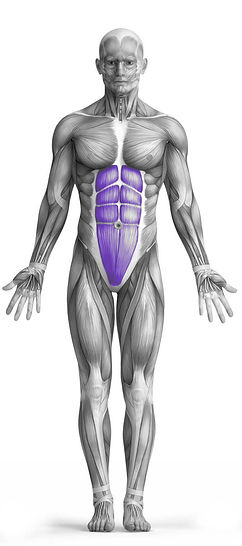

Exercise Synopsis
Target Muscle Group
Abs
Secondary Targets
Execution
Isolation
Force Type
Core
Required Equipment
Bodyweight
Fitness Level
Beginner
Variations
Alternatives
None
Timer
Hour
Minute
Second
Stopwatch
00:00:00:00
Overview
The 45-Degree Side Bend is a bodyweight exercise that primarily targets the abdominal muscles while engaging the obliques as secondary muscles. Performed by standing with feet shoulder-width apart, placing one hand on the hip and extending the other arm overhead, the movement involves bending the torso to the side, bringing the extended arm toward the foot, pausing briefly at the bottom, and returning to the starting position. This exercise emphasizes lateral flexion of the spine, helping to strengthen and tone the sides of the core while improving overall core stability and flexibility.
How to Perform
Position your feet so they are about shoulder-width apart, keeping your posture tall and stable.
Rest one hand on your waist while raising the other arm straight overhead.
Lean your upper body slowly to the side, guiding the raised arm toward the side of your leg.
Hold briefly at the lowest point of the bend, feeling the stretch along your obliques.
Slowly return to the upright starting position with control.
Perform the movement on the opposite side, alternating sides for the desired number of repetitions.
Maintain steady breathing and avoid collapsing the torso; keep your core engaged throughout.
★ Bonus: For exercises that involve external weights (such as dumbbells, barbells, or machines), the One Rep Max (1RM) calculator can help you estimate your maximum lifting capacity. Use it to track your strength progress and adjust your training for optimal results.
Tips
Keep your abdominal muscles tight and active for the entire exercise.
Exhale as you lean to the side and inhale as you come back to the upright position.
How Not to Perform
Don’t use momentum to bend sideways; avoid swinging your arm or torso.
Don’t let your hips shift forward or backward; keep them aligned and stable.
Don’t round your back; maintain a straight spine throughout the movement.
Don’t lock your knees or push them outward; keep a slight soft bend and natural alignment.
Don’t hold your breath; maintain steady, controlled breathing.
Don’t lean too far; avoid overextending beyond your comfortable range of motion.
Don’t let your shoulders shrug or tense; keep them relaxed and down.
Don’t move too quickly; perform each repetition slowly and deliberately.
Variations
Variations of fitness exercises refer to different ways of performing a specific exercise or movement to target various muscle groups, intensities, or goals. These variations aim to challenge the body differently, prevent plateaus, and cater to individuals with varying fitness levels.
Alternatives
Alternative exercises in fitness refer to different movements or activities that target similar muscle groups or serve the same training purpose as the primary exercise. These alternative exercises can be used as substitutes when the original exercise is unavailable or challenging to perform due to various reasons such as equipment limitations, injuries, or personal preferences.
