


Bottoms Up Kettlebell Turkish Get Up 101 Video Tutorial
0
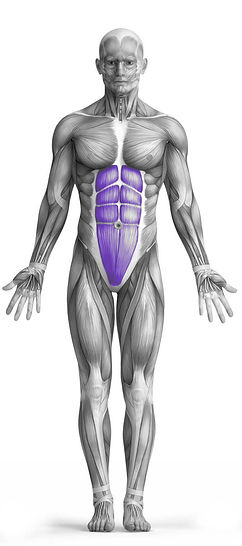

Exercise Synopsis
Target Muscle Group
Abs
Secondary Targets
Execution
Compound
Force Type
Push (Bilateral)
Required Equipment
Kettlebell
Fitness Level
Beginner
Variations
None
Alternatives
None
Timer
Hour
Minute
Second
Stopwatch
00:00:00:00
Overview
The Bottoms Up Kettlebell Turkish Get Up is a full-body exercise designed to improve core strength, stability, and balance while enhancing coordination and control. This advanced variation of the traditional Turkish Get Up requires holding the kettlebell upside down (bottoms up), significantly increasing the challenge to grip strength and shoulder stability. The movement targets the abs as the primary muscle group while engaging secondary muscles such as the adductors, glutes, hamstrings, quads, shoulders, and upper back. The exercise involves transitioning through multiple positions, including lying, sitting, kneeling, and standing, making it a dynamic workout that demands focus and precision. It’s an excellent addition to functional training routines, particularly for athletes or fitness enthusiasts aiming to improve strength and stability across multiple planes of motion.
How to Perform
Lie on your side with the kettlebell positioned close to your chest in a front-rack position, holding the handle with both hands stacked for control.
Roll onto your back and use your free hand to guide the kettlebell into a bottoms-up position, ensuring the handle points downward for added stability challenge.
Press the kettlebell directly upward until your arm is fully extended, and stretch your free arm out to the side at shoulder level for balance.
Bend the knee on the same side as the kettlebell (e.g., if the kettlebell is in your right hand, your right knee should be bent) while keeping the opposite leg straight.
Initiate the movement by engaging your core to sit up, first supporting yourself on your elbow, while maintaining the kettlebell’s vertical position.
Push through your braced elbow to extend your arm, transitioning your weight onto your hand, ensuring the kettlebell remains steady overhead.
Lift your hips into a bridge position, keeping one leg straight and the other bent, ensuring a strong base and stable core.
Sweep the straight leg under your body, positioning it into a half-kneeling stance while keeping one hand grounded and the kettlebell extended above.
Bring your torso upright into a full half-kneeling position, adjust the back leg to align with the forward leg, and press through the front foot to stand tall with the kettlebell overhead.
Reverse the motion by stepping back into a lunge, lowering yourself into the half-kneeling stance with control.
Place your hand back on the floor and sweep the straight leg forward to return to the bridge position, keeping the kettlebell steady.
Lower your hips, transition onto your elbow, and then recline fully to your back, maintaining control of the kettlebell throughout.
Roll back to your side and safely return the kettlebell to the starting position, ready for the next repetition.
★ Bonus: For exercises that involve external weights (such as dumbbells, barbells, or machines), the One Rep Max (1RM) calculator can help you estimate your maximum lifting capacity. Use it to track your strength progress and adjust your training for optimal results.
Tips
Keep your eyes on the kettlebell throughout the entire movement. While advanced practitioners may eventually look straight ahead during the half-kneeling position, beginners should prioritize focusing on the weight to maintain control and stability.
Begin with light or no weight when learning the movement. Practice using a shoe, a ball, or any lightweight object to build familiarity with the technique before progressing to heavier loads.
During the initial sit-up phase, think of the phrase “punch and crunch” to remind yourself to engage your core and drive the kettlebell upward in a controlled manner.
The Turkish Get Up is often utilized as a corrective exercise or as part of a warm-up routine. However, it can also be incorporated into general fitness programs for its functional benefits.
Grip the kettlebell handle firmly to enhance shoulder stability and control, which are critical for safely performing the exercise.
How Not to Perform
Avoid Rushing Through the Movement: Perform each phase of the Turkish Get Up slowly and deliberately. Rushing can compromise your form, leading to potential injuries and reducing the effectiveness of the exercise.
Don’t Let the Kettlebell Drift: Keep the kettlebell directly above your shoulder at all times. Allowing it to move out of alignment increases strain on the shoulder and makes it harder to control.
Don’t Start with Heavy Weight: Using too much weight too soon can lead to poor form and unnecessary strain on your joints. Master the technique with light or no weight before progressing.
Avoid Using Momentum: Do not swing your body or use jerky motions to transition between positions. Focus on controlled, smooth movements to target the core and other stabilizing muscles effectively.
Don’t Lose Core Engagement: Failing to engage your core throughout the exercise shifts the workload to your lower back and reduces the activation of your abs, the primary target muscle.
Avoid Improper Hand Placement: Ensure your grounded hand is firmly planted with fingers spread wide for stability. Incorrect placement can make the transition phases wobbly and unsafe.
Don’t Overextend the Shoulder: Keep the shoulder of the working arm packed and stable. Overextending or letting it shrug up toward your ear can lead to strain or injury.
Avoid Misaligning the Knees and Feet: During the half-kneeling phase, ensure your back knee is aligned under your hips and your front foot is firmly planted. Misalignment reduces stability and efficiency.
Don’t Neglect Breathing: Holding your breath or breathing irregularly can create unnecessary tension. Maintain steady, controlled breathing to stay focused and energized.
Avoid Skipping the Reverse Movement: Ensure you practice the return phase with as much focus as the ascent. Skipping or rushing this part can lead to poor habits and diminish the exercise’s benefits.
Don’t Let the Kettlebell Wobble: Keep a firm grip on the kettlebell and maintain a steady wrist position. A wobbly kettlebell can compromise control and increase the risk of injury.
Avoid Overlooking Warm-Up and Mobility Work: Failing to prepare your shoulders, hips, and core with mobility exercises can increase the likelihood of strain during the Turkish Get Up.
Variations
Variations of fitness exercises refer to different ways of performing a specific exercise or movement to target various muscle groups, intensities, or goals. These variations aim to challenge the body differently, prevent plateaus, and cater to individuals with varying fitness levels.
Alternatives
Alternative exercises in fitness refer to different movements or activities that target similar muscle groups or serve the same training purpose as the primary exercise. These alternative exercises can be used as substitutes when the original exercise is unavailable or challenging to perform due to various reasons such as equipment limitations, injuries, or personal preferences.
