


Cable Kneeling Crunch 101 Video Tutorial
0
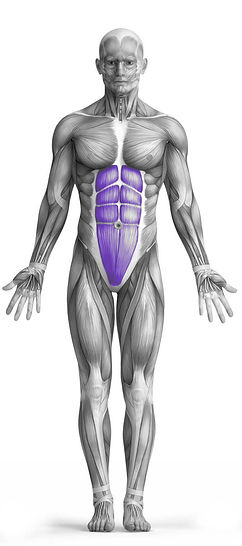

Exercise Synopsis
Target Muscle Group
Abs
Secondary Targets
Execution
Isolation
Force Type
Core
Required Equipment
Cable Machine
Fitness Level
Intermediate
Variations
Alternatives
Timer
Hour
Minute
Second
Stopwatch
00:00:00:00
Overview
Cable Kneeling Crunch is an isolation exercise performed using a cable machine, primarily targeting the abdominal muscles while also engaging the obliques as a secondary focus. By kneeling in front of the cable and pulling the handle down towards the knees with controlled movement, this exercise emphasizes core contraction and stability, promoting strength and definition in the abs. It allows for adjustable resistance, making it suitable for different fitness levels, and helps improve overall core control and posture.
How to Perform
Position yourself on your knees on a mat facing a cable machine, firmly holding a straight bar with a tall, upright posture.
Engage your core and draw the bar down towards your knees in a slow, controlled motion, focusing on contracting your abdominal muscles.
Gradually release the bar back to the starting point while maintaining tension in your abs, then repeat for the chosen number of repetitions and sets.
Keep your movements smooth and deliberate, avoiding momentum, and ensure your lower back stays neutral throughout the exercise.
Breathe steadily, exhaling as you pull down and inhaling as you return, to maximize core activation and stability.
★ Bonus: For exercises that involve external weights (such as dumbbells, barbells, or machines), the One Rep Max (1RM) calculator can help you estimate your maximum lifting capacity. Use it to track your strength progress and adjust your training for optimal results.
Tips
Focus on slow, controlled movements to maximize abdominal engagement.
Keep your lower back neutral to prevent strain.
Avoid using momentum; rely solely on your core muscles.
Exhale while crunching down and inhale when returning.
Maintain a firm grip on the bar without tensing your shoulders.
Engage obliques slightly by subtly twisting if desired for added activation.
Use an appropriate weight to ensure proper form without compromising control.
Keep your knees and hips stable throughout the movement.
Pause briefly at the bottom to intensify the contraction.
Ensure your head and neck stay aligned with your spine to avoid tension.
How Not to Perform
Do not use your arms or shoulders to pull the bar down instead of your abs.
Do not arch or round your lower back during the movement.
Do not jerk or swing the bar; avoid using momentum.
Do not lock your knees or hips; keep them slightly flexible.
Do not hold your breath; maintain steady breathing.
Do not use excessively heavy weight that compromises form.
Do not let your head drop forward or strain your neck.
Do not rush through repetitions; control the tempo.
Do not lean too far forward or backward; keep an upright posture.
Do not relax your core at any point; maintain constant engagement.
Variations
Variations of fitness exercises refer to different ways of performing a specific exercise or movement to target various muscle groups, intensities, or goals. These variations aim to challenge the body differently, prevent plateaus, and cater to individuals with varying fitness levels.
Alternatives
Alternative exercises in fitness refer to different movements or activities that target similar muscle groups or serve the same training purpose as the primary exercise. These alternative exercises can be used as substitutes when the original exercise is unavailable or challenging to perform due to various reasons such as equipment limitations, injuries, or personal preferences.
