


Cable Standing Crunch 101 Video Tutorial
0
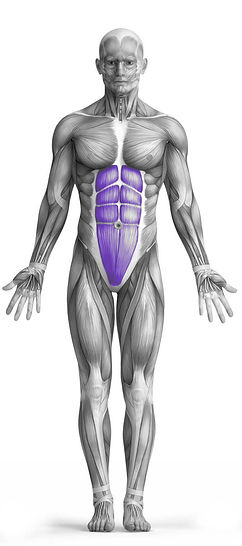

Exercise Synopsis
Target Muscle Group
Abs
Secondary Targets
Execution
Isolation
Force Type
Core
Required Equipment
Cable Machine
Fitness Level
Intermediate
Variations
Alternatives
Timer
Hour
Minute
Second
Stopwatch
00:00:00:00
Overview
The Cable Standing Crunch is an isolation exercise that primarily targets the abdominal muscles while engaging the obliques as a secondary focus. Performed using a cable machine with a rope attachment, it involves standing with feet shoulder-width apart, holding the rope at shoulder level, and bending at the waist to bring the elbows toward the knees. This movement emphasizes controlled contraction of the core, promoting abdominal strength and definition while minimizing strain on the lower back. Adjusting the cable weight or performing the exercise more slowly can increase intensity and further challenge the abdominal muscles.
How to Perform
Adjust the cable machine so that the pulley is positioned at its highest point and attach a rope handle securely.
Stand with your back toward the machine, feet about shoulder-width apart, and hold the rope with both hands, raising it to shoulder level.
Keep your elbows bent and hands near the sides of your head, maintaining a relaxed grip on the rope.
Tighten your core and ensure your spine stays neutral, avoiding any arching or leaning.
Exhale as you hinge at the waist, drawing your elbows down toward your knees while keeping your feet rooted, feeling your abs contract.
Pause briefly at the bottom to maximize abdominal engagement and maintain tension in your core.
Inhale as you slowly straighten your torso back to the starting upright position, controlling the movement throughout.
Perform the exercise for the planned number of reps, keeping movements smooth and deliberate to stay focused on the abs.
To make the exercise more challenging, either increase the weight on the cable or slow down the motion to intensify the contraction.
Always move deliberately and avoid using momentum, protecting your lower back while keeping the emphasis on your abdominal muscles.
★ Bonus: For exercises that involve external weights (such as dumbbells, barbells, or machines), the One Rep Max (1RM) calculator can help you estimate your maximum lifting capacity. Use it to track your strength progress and adjust your training for optimal results.
Tips
Focus on slow, controlled movements to maximize abdominal engagement.
Keep your core tight throughout to protect the lower back.
Avoid using momentum from your arms or shoulders; let the abs do the work.
Exhale fully as you crunch down and inhale as you return to standing.
Maintain a neutral spine and avoid excessive rounding of the lower back.
Keep your feet firmly planted to provide a stable base.
Pause briefly at the bottom of the crunch to increase muscle activation.
Adjust the cable weight to challenge your abs without compromising form.
Incorporate oblique twists subtly to engage the side abdominal muscles.
Perform each rep with full range of motion for maximum effectiveness.
How Not to Perform
Do not use your arms or shoulders to pull the rope; this reduces abdominal activation.
Do not jerk or swing your torso; avoid using momentum to complete the movement.
Do not arch or round your lower back excessively; this can cause strain or injury.
Do not lift your heels or shift your feet; keep them firmly planted for stability.
Do not hold your breath; maintain proper breathing throughout the exercise.
Do not rush through repetitions; fast movements decrease effectiveness and increase injury risk.
Do not use a weight that is too heavy, which forces poor form or compensatory movements.
Do not let your elbows flare out excessively; keep them near the sides of your head.
Do not neglect pausing at the crunch; skipping this reduces abdominal engagement.
Do not lean forward or backward outside the intended range; keep motion controlled and focused on the abs.
Variations
Variations of fitness exercises refer to different ways of performing a specific exercise or movement to target various muscle groups, intensities, or goals. These variations aim to challenge the body differently, prevent plateaus, and cater to individuals with varying fitness levels.
Alternatives
Alternative exercises in fitness refer to different movements or activities that target similar muscle groups or serve the same training purpose as the primary exercise. These alternative exercises can be used as substitutes when the original exercise is unavailable or challenging to perform due to various reasons such as equipment limitations, injuries, or personal preferences.
