


Lying Bench Reverse Crunch 101 Video Tutorial
0

Exercise Synopsis
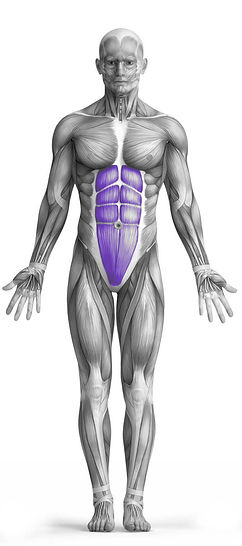
Target Muscle Group
Abs
Execution
Isolation
Force Type
Core
Required Equipment
Bodyweight
Fitness Level
Intermediate
Variations
None
Alternatives
Timer
Hour
Minute
Second
Stopwatch
00:00:00:00
Overview
The Lying Bench Reverse Crunch is a bodyweight exercise designed to target the abdominal muscles, with secondary engagement of the obliques and glutes. Executed by lying flat on a bench or mat, the individual lifts their legs towards their torso, lifting the pelvis off the bench by contracting the lower abs. This movement effectively isolates the lower abdominal muscles, providing a challenging workout without the need for additional equipment. By maintaining control throughout the movement, individuals can effectively engage the core muscles, enhancing strength and stability in the abdominal region while also providing secondary benefits to the obliques and glutes.
How to Perform
Begin by positioning yourself on your back atop a flat bench, ensuring a comfortable and stable surface for the exercise.
Extend your arms overhead and grasp the top of the bench firmly with both hands to anchor yourself in place.
Engage your abdominal muscles by bracing them, creating a stable foundation for the movement.
Straighten your legs and lift them upwards towards the ceiling, maintaining control throughout the motion.
Focus on contracting your abdominals as you bend your knees and bring your legs towards the top of the bench, lifting your pelvis off the bench to engage the lower abs.
Hold this position momentarily, emphasizing the contraction in your abdominal muscles to maximize the effectiveness of the exercise.
Slowly and with control, lower your legs back down to the starting position, maintaining tension in your abdominals throughout the movement to ensure continuous engagement.
Concentrate on maintaining proper form and alignment throughout the exercise, avoiding any excessive swinging or momentum.
As you become more proficient with the movement, you can increase the challenge by adjusting the tempo or incorporating variations such as holding a weight between your feet.
Incorporate this bodyweight exercise into your core workout routine to strengthen the abdominal muscles, with additional benefits for the obliques and glutes, while requiring minimal equipment.
★ Bonus: For exercises that involve external weights (such as dumbbells, barbells, or machines), the One Rep Max (1RM) calculator can help you estimate your maximum lifting capacity. Use it to track your strength progress and adjust your training for optimal results.
Tips
Begin by lying flat on your back on a bench or mat, ensuring stability and comfort.
Grasp the top of the bench or anchor yourself firmly to maintain stability throughout the exercise.
Engage your abdominal muscles by bracing them, creating a strong foundation for the movement.
Lift your legs towards the ceiling, keeping them straight to initiate the movement.
Contract your abdominals as you bend your knees and bring your legs towards your torso, lifting your pelvis off the bench.
Focus on the upward movement, emphasizing the contraction in your abs to maximize effectiveness.
Hold the top position briefly to fully engage the abdominal muscles before slowly lowering your legs back down.
Maintain control throughout the movement, avoiding any swinging or jerking motions.
Ensure continuous tension in the abs by keeping them engaged even during the lowering phase.
Aim for a smooth and controlled execution, focusing on quality over quantity to maximize results while targeting the abs, obliques, and glutes effectively.
How Not to Perform
Avoid using momentum to swing your legs upward; instead, focus on controlled movements to engage the targeted muscles effectively.
Do not arch your back excessively during the exercise, as this can strain the lower back and detract from the engagement of the abdominal muscles.
Resist the urge to pull on the bench or use your arms to lift your legs; rely solely on the strength of your abdominal muscles to perform the movement.
Avoid letting your legs drop too quickly during the lowering phase; maintain control to maximize muscle engagement and prevent strain on the lower back.
Do not hold your breath; instead, remember to breathe steadily throughout the exercise to support proper oxygenation of muscles and enhance performance.
Avoid lifting your head and neck off the bench; keep them relaxed and in line with your spine to avoid unnecessary strain.
Avoid excessive momentum or swinging of the legs; focus on smooth and controlled movements to target the abs, obliques, and glutes effectively.
Do not rush through the exercise; perform each repetition with deliberate movements and focus on maintaining proper form.
Avoid lifting your hips excessively off the bench; aim to lift your pelvis using the strength of your abdominal muscles rather than relying on momentum.
Do not neglect proper alignment and positioning; ensure your body is properly supported on the bench to prevent injuries and maximize the effectiveness of the exercise.
Variations
Variations of fitness exercises refer to different ways of performing a specific exercise or movement to target various muscle groups, intensities, or goals. These variations aim to challenge the body differently, prevent plateaus, and cater to individuals with varying fitness levels.
Alternatives
Alternative exercises in fitness refer to different movements or activities that target similar muscle groups or serve the same training purpose as the primary exercise. These alternative exercises can be used as substitutes when the original exercise is unavailable or challenging to perform due to various reasons such as equipment limitations, injuries, or personal preferences.
