


Medicine Ball Pike 101 Video Tutorial
0
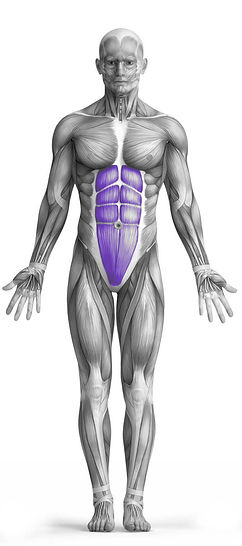

Exercise Synopsis
Target Muscle Group
Abs
Secondary Targets
Execution
Compound
Force Type
Core
Required Equipment
Medicine Ball
Fitness Level
Intermediate
Variations
None
Alternatives
Timer
Hour
Minute
Second
Stopwatch
00:00:00:00
Overview
Medicine Ball Pike is a challenging core-focused exercise performed from a push-up position with the feet placed on a medicine ball, requiring strong abdominal engagement to lift the hips upward while maintaining straight legs and controlled balance. The movement emphasizes abdominal strength and stability as the body forms a pike position, while the hip flexors assist in lifting the lower body and guiding the ball toward the hands. This exercise also demands coordination and core control to smoothly return to the starting position, making it an effective choice for building core strength and improving overall body stability using a medicine ball.
How to Perform
Begin in a high plank position with your hands firmly on the floor and your feet placed on top of a medicine ball, ensuring your body forms a straight line from head to heels.
Engage your abdominal muscles, brace your core, and keep your legs fully extended while maintaining steady pressure through your hands.
Slowly lift your hips upward toward the ceiling by pulling the ball forward with your feet, allowing your body to fold into a controlled pike position.
Continue elevating the hips until your torso is nearly vertical and the ball has rolled closer to your hands, keeping your neck relaxed and spine aligned.
Hold the top position briefly while maintaining balance and strong core tension without bending the knees.
Gradually lower your hips by pushing the ball back to its original position, returning to a stable plank with controlled movement.
Complete each repetition with smooth, deliberate motion, aiming for eight to twelve repetitions per set.
Rest for approximately forty-five seconds between sets and perform a total of three controlled sets.
★ Bonus: For exercises that involve external weights (such as dumbbells, barbells, or machines), the One Rep Max (1RM) calculator can help you estimate your maximum lifting capacity. Use it to track your strength progress and adjust your training for optimal results.
Tips
Keep your core fully braced throughout the movement to maximize abdominal activation and prevent lower-back strain.
Maintain straight legs and avoid bending the knees to ensure the abs and hip flexors remain the primary working muscles.
Move slowly and under control when rolling the ball to improve stability and increase time under tension.
Press firmly through your hands to stabilize the shoulders and prevent excessive upper-body sway.
Lift the hips upward rather than pulling with the legs to keep the focus on the abdominal muscles.
Stop the movement if balance is lost and reset to maintain proper alignment and control.
Exhale as you raise the hips to enhance core engagement and improve movement efficiency.
Keep your head neutral and eyes focused slightly forward to avoid unnecessary neck tension.
How Not to Perform
Do not allow your lower back to sag or arch, as this shifts tension away from the abs and increases injury risk.
Do not bend your knees during the movement, since this reduces abdominal activation and overuses the hip flexors.
Do not rush the exercise or use momentum to lift the hips, which wastes energy and decreases core engagement.
Do not pull the ball aggressively with your feet instead of lifting through the core.
Do not let your shoulders collapse or shrug upward, as this can strain the neck and upper body.
Do not lose control at the top position by over-piking beyond your mobility limits.
Do not hold your breath during the movement, as this reduces core stability and control.
Do not allow excessive side-to-side shifting, which indicates poor balance and weak core control.
Variations
Variations of fitness exercises refer to different ways of performing a specific exercise or movement to target various muscle groups, intensities, or goals. These variations aim to challenge the body differently, prevent plateaus, and cater to individuals with varying fitness levels.
Alternatives
Alternative exercises in fitness refer to different movements or activities that target similar muscle groups or serve the same training purpose as the primary exercise. These alternative exercises can be used as substitutes when the original exercise is unavailable or challenging to perform due to various reasons such as equipment limitations, injuries, or personal preferences.
