


Wall Press Heel Tap 101 Video Tutorial
0

Exercise Synopsis
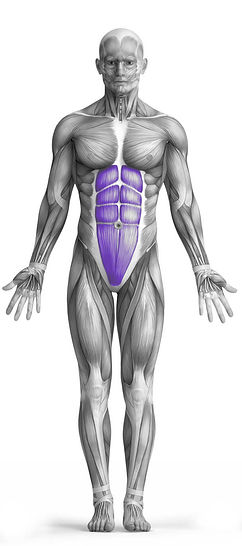
Target Muscle Group
Abs
Secondary Targets
None
Execution
Compound
Force Type
Isometric
Required Equipment
Bodyweight
Fitness Level
Beginner
Variations
None
Alternatives
Timer
Hour
Minute
Second
Stopwatch
00:00:00:00
Overview
Wall Press Heel Tap is a bodyweight abdominal exercise that focuses on strengthening the abs with no secondary muscle involvement. It involves lying on your back with your feet against a wall and performing controlled movements to tap your heels, engaging the core throughout. The exercise emphasizes stability and precise abdominal contraction, making it effective for improving core strength and endurance without the need for any equipment.
How to Perform
Lie on your back with your hips and knees bent at 90 degrees, feet positioned against a wall, and arms extended overhead pressing into the wall.
Slowly lower one leg, maintaining the 90-degree bend at the knee, until your heel lightly touches the floor.
Bring the leg back to the original 90/90 position.
Perform the same movement with the other leg.
Continue alternating legs for the total number of repetitions desired, focusing on controlled movement and keeping the core engaged throughout.
★ Bonus: For exercises that involve external weights (such as dumbbells, barbells, or machines), the One Rep Max (1RM) calculator can help you estimate your maximum lifting capacity. Use it to track your strength progress and adjust your training for optimal results.
Tips
Keep a steady breathing pattern and avoid holding your breath; do not rely on breathing to make up for instability.
Perform each movement deliberately and with control rather than rushing through repetitions.
Exhale as you extend the leg, keeping the ribs down to protect the lower back from arching.
Begin with the shortest lever variation, such as the heel tap, to maintain a neutral lumbar spine before advancing to 90/90 extensions and eventually straight-leg versions.
How Not to Perform
Do not let your lower back arch off the floor; keep it pressed down to maintain core engagement.
Do not swing your leg or use momentum; move slowly and with control.
Do not hold your breath or tense your neck and shoulders.
Do not lift your hips or shift your body to reach the floor; keep your spine neutral.
Do not extend the leg too quickly or beyond your range of control.
Do not ignore proper breathing; exhale during the leg extension.
Do not start with the longest lever or straight leg variation before mastering shorter lever versions.
Do not let your ribs flare or your shoulders lift off the floor.
Variations
Variations of fitness exercises refer to different ways of performing a specific exercise or movement to target various muscle groups, intensities, or goals. These variations aim to challenge the body differently, prevent plateaus, and cater to individuals with varying fitness levels.
Alternatives
Alternative exercises in fitness refer to different movements or activities that target similar muscle groups or serve the same training purpose as the primary exercise. These alternative exercises can be used as substitutes when the original exercise is unavailable or challenging to perform due to various reasons such as equipment limitations, injuries, or personal preferences.
