


Decline Crunch 101 Video Tutorial
0
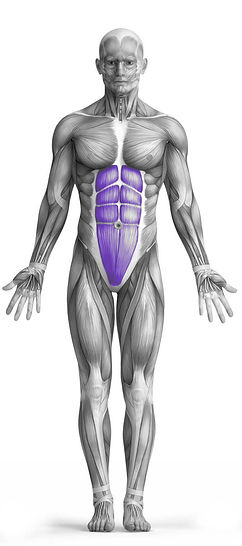

Exercise Synopsis
Target Muscle Group
Abs
Secondary Targets
None
Execution
Isolation
Force Type
Core
Required Equipment
Bodyweight
Fitness Level
Intermediate
Variations
None
Alternatives
Timer
Hour
Minute
Second
Stopwatch
00:00:00:00
Overview
The Decline Crunch is an isolation exercise that primarily targets the abdominal muscles, performed using just bodyweight on a decline bench. By lying back on the bench with feet secured, the exerciser engages the core to lift the upper body toward the knees, focusing on controlled contraction and movement. This exercise emphasizes the upper and middle abs, enhancing core strength and stability without involving secondary muscle groups, making it effective for isolating and intensifying abdominal activation.
How to Perform
Set the decline bench to an angle that feels comfortable, usually between 15 and 30 degrees.
Sit down and lock your feet securely under the bench’s padded supports.
Lean back, placing your hands either behind your head or folded across your chest.
Tighten your abdominal muscles by drawing your navel inward toward your spine.
Exhale as you curl your torso upward, bringing your chest toward your knees while focusing on squeezing your abs.
Hold the top position for a moment to maximize abdominal engagement.
Inhale as you gradually lower your upper body back to the starting position, maintaining control throughout.
Continue for the number of repetitions you aim to complete, ensuring steady, deliberate movements.
★ Bonus: For exercises that involve external weights (such as dumbbells, barbells, or machines), the One Rep Max (1RM) calculator can help you estimate your maximum lifting capacity. Use it to track your strength progress and adjust your training for optimal results.
Tips
Perform each repetition deliberately to fully activate your abdominal muscles and prevent swinging.
Rely on your core to lift your torso, avoiding pulling with your hands on the head or neck.
Breathe rhythmically, exhaling while curling up and inhaling as you return to the starting position.
Adjust the bench angle to a moderate decline to protect your lower back from excessive strain.
Begin with a manageable number of reps and gradually increase as your strength and endurance improve.
If you feel neck tension, place a small towel behind your head for added support.
How Not to Perform
Do not use momentum or jerk your body to lift up; avoid swinging your torso.
Do not pull on your neck or head with your hands during the crunch.
Do not hold your breath or breathe irregularly; avoid exhaling and inhaling at the wrong times.
Do not set the decline bench too steep, which can strain your lower back.
Do not rush through repetitions; avoid performing them too quickly.
Do not overextend your range of motion beyond comfort, which can cause injury.
Do not neglect engaging your core; avoid letting your abs relax during the movement.
Do not lift your feet or lose contact with the bench pads; avoid unstable foot positioning.
Do not ignore discomfort in your neck; avoid continuing without support if needed.
Variations
Variations of fitness exercises refer to different ways of performing a specific exercise or movement to target various muscle groups, intensities, or goals. These variations aim to challenge the body differently, prevent plateaus, and cater to individuals with varying fitness levels.
Alternatives
Alternative exercises in fitness refer to different movements or activities that target similar muscle groups or serve the same training purpose as the primary exercise. These alternative exercises can be used as substitutes when the original exercise is unavailable or challenging to perform due to various reasons such as equipment limitations, injuries, or personal preferences.
