


Kneeling Hip Flexor Stretch 101 Video Tutorial
0
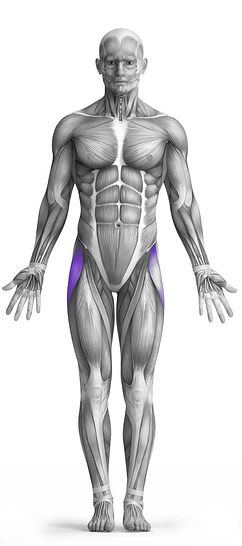

Exercise Synopsis
Target Muscle Group
Hip Flexors
Secondary Targets
Execution
Isolation
Force Type
Stretch
Required Equipment
Bodyweight
Fitness Level
Intermediate
Variations
Alternatives
None
Timer
Hour
Minute
Second
Stopwatch
00:00:00:00
Overview
The Kneeling Hip Flexor Stretch is a bodyweight exercise that primarily targets the hip flexors while also engaging the quads as a secondary muscle group. To perform it, start in a kneeling lunge position with one knee on the floor and the other leg bent at 90 degrees in front, foot flat. Keep your torso upright and place one hand on your hip. Squeeze your back glutes and gently shift your body weight forward, reaching back with your free hand to grasp your rear foot to deepen the stretch. Hold this position for the desired duration, focusing on a controlled, steady stretch to improve hip flexibility and quad mobility.
How to Perform
Begin in a kneeling lunge position with your right knee on the floor and your left foot flat in front, knee bent at 90 degrees.
Keep your torso upright and place your right hand on your right hip for support.
Engage your glutes on the side of the kneeling leg to stabilize your pelvis.
Slowly shift your body weight forward slightly, maintaining an upright torso, to feel a stretch in the hip flexor of the kneeling leg.
Reach your left hand behind you to grasp the ankle or foot of the kneeling leg to increase the stretch if comfortable.
Hold the stretch for the prescribed time, breathing deeply and keeping muscles relaxed.
Slowly release the foot, return to the starting kneeling position, and switch sides to repeat the stretch on the opposite leg.
★ Bonus: For exercises that involve external weights (such as dumbbells, barbells, or machines), the One Rep Max (1RM) calculator can help you estimate your maximum lifting capacity. Use it to track your strength progress and adjust your training for optimal results.
Tips
Keep your torso upright to prevent lower back strain.
Engage your glutes on the kneeling side to stabilize the pelvis.
Avoid overarching your lower back when reaching for your foot.
Move into the stretch gradually, never force the range of motion.
Breathe deeply and consistently to relax the muscles.
Ensure your front knee stays aligned over the ankle.
Do not let your hips tilt sideways; keep them squared forward.
Only reach for your foot if it doesn’t cause discomfort or pain.
Hold the stretch steadily; avoid bouncing movements.
Switch sides carefully to maintain balance and symmetry.
How Not to Perform
Do not lean forward excessively, which can strain the lower back.
Avoid letting the hips rotate or tilt sideways.
Do not arch the back when reaching for the foot.
Avoid locking the front knee; keep it soft and aligned over the ankle.
Do not bounce or use jerky movements during the stretch.
Avoid holding your breath; maintain steady breathing.
Do not force your foot to reach if it causes discomfort.
Avoid relaxing glutes on the kneeling side, which reduces stretch effectiveness.
Do not let your torso lean to one side; keep it upright and squared.
Avoid rushing through the hold; maintain steady time to maximize muscle focus.
Variations
Variations of fitness exercises refer to different ways of performing a specific exercise or movement to target various muscle groups, intensities, or goals. These variations aim to challenge the body differently, prevent plateaus, and cater to individuals with varying fitness levels.
Alternatives
Alternative exercises in fitness refer to different movements or activities that target similar muscle groups or serve the same training purpose as the primary exercise. These alternative exercises can be used as substitutes when the original exercise is unavailable or challenging to perform due to various reasons such as equipment limitations, injuries, or personal preferences.
